



You may have reached the point where your loved one needs more help at home, and you have been stepping in more often to keep things going. After a while, you may decide it is time to speak with a home care provider and find out what kind of support could help.
Once that call or inquiry is made, another question usually comes up: what should you prepare before the consultation?
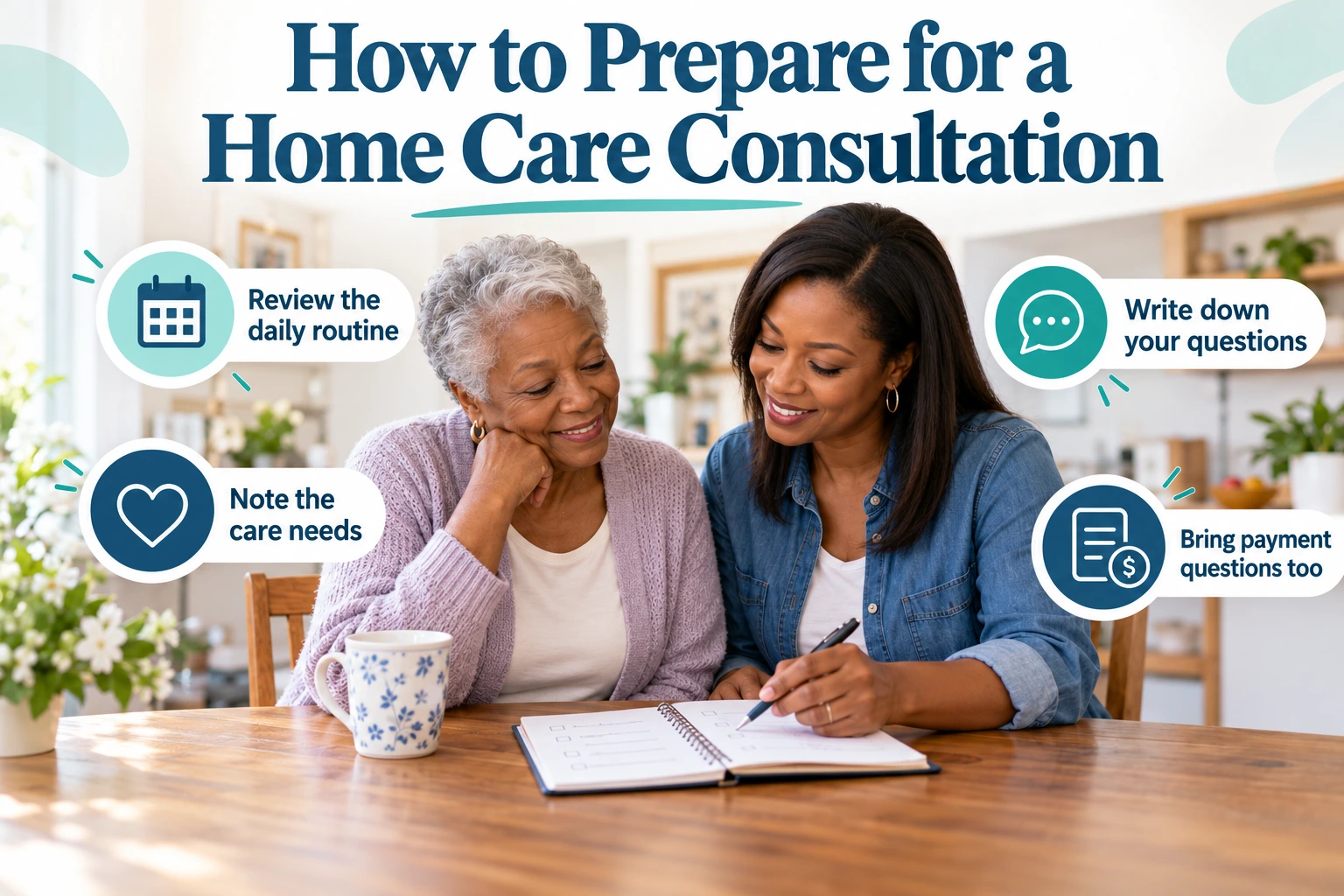
You do not need to have everything figured out before the meeting. It is enough to come in with a sense of what your loved one’s day looks like, where you are seeing a need for help, and what you want to ask. A few notes can make the conversation easier to follow and help you remember the details you wanted to discuss.
Start With the Day Your Loved One Is Already Living
Think about what usually happens in the morning, afternoon, and evening. Where does your loved one manage well on their own? When do they usually ask you or another family member for help?
You might notice that mornings go smoothly, but preparing dinner takes more effort later in the day. Maybe your parent manages household routines well but needs someone to help with errands or provide company in the afternoon.
You do not need to document every hour. A simple picture of the day is enough. The goal is to help the care provider understand what life at home currently looks like, rather than trying to create a new routine before the consultation even happens.
It may help to jot down a few examples as you think of them. Specific situations are often easier to discuss than broad statements such as “Mom needs more help.”
Talk With Your Loved One Before the Consultation
Your observations matter, but your loved one’s preferences matter too.
Before the meeting, ask what kind of help they would feel comfortable receiving and what they would rather continue doing themselves. They may also have concerns about privacy, scheduling, or having someone new in the home.
When you want to start talking to your parents about home care, begin with what matters to them. Ask where they would welcome help, what they want to keep doing themselves, and what concerns they have about receiving care at home.
You do not need to resolve every concern before the consultation. Bring those thoughts with you. They can help shape the conversation and make sure your loved one’s preferences are part of it.
Write Down Where Help Would Be Useful
As you think through the day, jot down the moments when your loved one usually needs more help.
Maybe they would benefit from someone being there during meal preparation, helping with errands, or spending time with them when family members are at work. If personal routines are part of the concern, note that too.
Try to be specific without turning the list into a detailed care plan. You are not expected to decide which service is right before speaking with a provider.
Three or four clear examples may be all you need to get the conversation started. You can talk through the details during the consultation.
Think About When Support Would Be Most Helpful
You do not need to decide on an exact schedule before the consultation.
Think instead about the parts of the day when help would matter most and when family members are usually available. You may find that weekdays are more difficult because of work schedules, while weekends are easier to cover. Another family may need more help in the morning or later in the day.
Your schedule may also change from week to week. Appointments, family commitments, and other responsibilities can affect when you need an extra person there.
Mention those patterns during the consultation. They can help guide the discussion about what kind of schedule may be practical for your family.
Write Down the Questions You Want to Ask
Once the conversation starts, it can be easy to forget one of the questions you meant to ask.
Write them down ahead of time so you can refer back to them during the consultation. You may want to ask how caregivers are selected, how scheduling works, or who you should contact if your loved one’s needs change.
You might also want to ask how communication with the family is handled. If more than one family member is involved in care decisions, it can help to discuss how updates and questions will be managed.
There is no need to come up with a long list. Focus on the things you genuinely want to understand before moving forward.
Include Payment Questions in Your Notes
Cost is part of the decision for many families, and it is reasonable to have questions about how care may be paid for.
You may want to ask about private pay, long-term care insurance, Medicaid, or other programs that could apply to your situation. You do not have to know the answer before the consultation.
If cost is one of your concerns, write down what you want to ask about home care payment options so you do not have to remember everything during the meeting.
Keeping those questions with the rest of your notes can help make sure they are not overlooked.
Gather the Basic Information You Already Have
There is usually no need to arrive with a large stack of paperwork unless the provider has specifically asked you to bring something.
Have your loved one’s basic contact information handy, along with the names of family members who are involved in care decisions. It can also help to keep your notes about daily routines, preferred times for help, and questions in one place.
If the provider needs anything else, they can let you know.
Use the Consultation to Talk Through What May Work
By the time you sit down for the consultation, you should have a better sense of what is working at home, where help is needed, and what your loved one is comfortable with. That gives the conversation a clear place to begin.
From there, you can talk through what kind of non-medical support may fit into everyday life. Your loved one may need companionship during part of the day, help with personal routines, or more regular assistance at home.
The details should come from the person’s actual needs and daily routine, not from trying to fit them into a standard plan.
At Serenity Care At Home LLC, we understand that every family comes into this conversation with different needs and questions.
You Do Not Need to Have Every Answer
A consultation is there to help you talk things through, not to test how prepared you are.
Bring what you know about your loved one’s routine, the places where help may be useful, and the questions you still have. You may leave the conversation with more to think about, and that is fine. You might want to speak with other family members or talk things over again with your loved one before deciding what comes next.
At Serenity Care At Home LLC, we understand that you may still be figuring out what kind of help makes sense. Coming prepared with a few observations and questions gives us a useful place to begin discussing what support could fit into life at home.
If you are ready to talk through your loved one’s needs and the questions you still have, you can get in touch with us to start the conversation. We can discuss what life at home looks like now and what kind of non-medical support may fit your family’s situation.


Leave a Reply